Your brain already knows what you meant, so your page always makes sense to you. Paste it into the Stand Out Lens. It reads it cold, shows you the line losing your buyers, and writes a better opening in your voice. No rewriting the whole thing. No new offer. No copywriter.
Tap the rhythm of Happy Birthday on your desk. One finger. Go on.
Easy, right? You can hear the whole song in your head while you tap.
In 1990, a Stanford graduate student called Elizabeth Newton turned that into an experiment. One person tapped a well-known song on a table. Another person listened and tried to name it.
Before they started, the tappers guessed how many listeners would get it. About half, they said.
Out of 120 songs, the listeners named 3.
They expected 1 in 2. They got 1 in 40.
The tappers weren't bad at tapping. They just couldn't stop hearing the tune. The listeners only got knocks on a table.
Your page, your emails and your ads work the same way. You hear the song. Your buyers hear knocks.
And that's why it reads fine to you, and still doesn't sell.
I've spent over a decade as the listener for other people's offers. The Stand Out Lens does that job for you. It reads your page cold, like a stranger who has never heard your song.
Paste your page in. Before your next send, you see the line where the right people stop, and get a better opening in your voice. Further down you'll see:
Meanwhile, offers worse than yours keep selling. Not because they're better. Because the people reading them can hear the song.
It's not you. And it's not your offer.
A different song this time, as taps. Press play and listen. You get 11 knocks and nothing else.
Turn your sound on. If you can't, watch the dots.
Jingle Bells.
Now press play again. This time you hear the tune, don't you? And you can't switch it off.
That's the tapper's problem. Once you know the song, you can't hear the knocks the way a stranger does.
It works a lot like the reason you can't tickle yourself. Your brain knows your own hand is coming, so it turns the feeling down. A team at University College London watched it happen in a brain scanner.
You can't read your own page cold. Your brain plays the song before your eyes reach the words.
You read your opening and hear everything behind it. The years of work. The client who cried on the call. What you meant. A stranger gets the words on the screen, gives them a few seconds, and leaves.
And it's not only you. Your partner knows the song. Your friends know the song. That's why they say "looks good".
And now there's a new friend in the room. Explain your offer to ChatGPT and it learns the song in seconds. Then it writes from inside your head, just like you do.
And that's why the rewrites didn't work. Every rewrite was you tapping the same song again, a bit louder.
The tapping study: Elizabeth Newton, Stanford University, 1990, as told by Chip and Dan Heath in Made to Stick. The tickle study: Blakemore, Wolpert and Frith, Nature Neuroscience, 1998.
A sales page I drafted for a wellness client, a $7 routine, before it went out. Same offer. Same proof. Here's the first screen before and after one run.
"After thousands of sessions helping people release stress, trauma, and pain…"
What the Lens found: the right people leave here, about 4 seconds in. Their thought: "Okay, a routine. But will it help my neck tonight, or is this one more video I'll save and never do?"
"Shoulders up by your ears again? Fifteen gentle minutes a day release the stress your body has been storing, so you sleep better from the first night."
Then carry on with: "These gentle yet powerful movements focus directly on your fascia…" The rest of the page stays.
The page was never launched, so there are no sales numbers here. This shows what one run gives you, not a result.
When sales go quiet, the usual fixes make sense. They share one flaw: they're all done by someone who knows the song.
The tune is still only in your head.
Same offer. Same traffic. Now they hear the song.
The Lens comes to your page the way your buyers do: cold. It has never heard your song, so it reads only what's on the screen.
Ask any AI to "make the beginning more impactful" and you'll get something punchier, written to be liked.
That's not what sells. Your opening has one real job: to set up your ending. So the Lens works the other way round. I call it the Backwards Read.
A new opening in your voice, from your own proof, that starts the right conversation with the right people. It tells you exactly which line of your current copy it flows into, so the rest stays.
Your strongest proof, your best line, the angle only you have. Often it's sitting in paragraph six, where nobody gets to.
It reads everything first. What do you want them to do: buy, book, reply, click? What price will they meet? What does a reader need to believe by then for yes to feel natural?
That's why the new opening doesn't just sound better. It leads somewhere. By the time the right person reaches your price and your button, it makes sense, and saying yes feels like the next step, not a risk.
It runs inside the AI you already use: Claude, ChatGPT or Gemini. And it gives you a positioning memory, so whatever your AI writes for you next starts from the right place.
Buyers decide in seconds, and they always ask the same things. The Lens tests your first screen against every one of them. Your report shows which ones your page passes and which it misses, quoted line by line.
Each one gets a pass, weak or fail, with the reason.
It names the main one on your page, shows the exact line where it happens, and what the reader thinks right there.
You've seen the line it found and the new opening. Here's everything else the same run gave back. It's a client's offer, so parts stay blurred.
Paste your page, email, ad or script (or a link), add a screenshot of the top, and say who you want to reach.
It reads to the end first, then shows you what a stranger sees in your first few seconds.
Want only the diagnosis? You can stop here. It's yours to keep.
Only what it can't see on your page, each with its best guess. Say "yes", correct it, or just say "go".
Three new first screens in your voice, built from your own proof, each set up for your call to action.
Dan Koe's The 2 Hour Writer: a strong page by a great writer, for a $150 course. Here's a short excerpt of what the Lens found. The full run took about 2 minutes.
Same page. Same offer. The new opening is built from what was already on his page, lower down. A great writer, and still the line his buyers would stop for wasn't the first one they saw.
Not affiliated with Dan Koe. A public page, as captured on 21 October 2026, quoted briefly as an example. Try it on any page you like: yours, or one you admire.
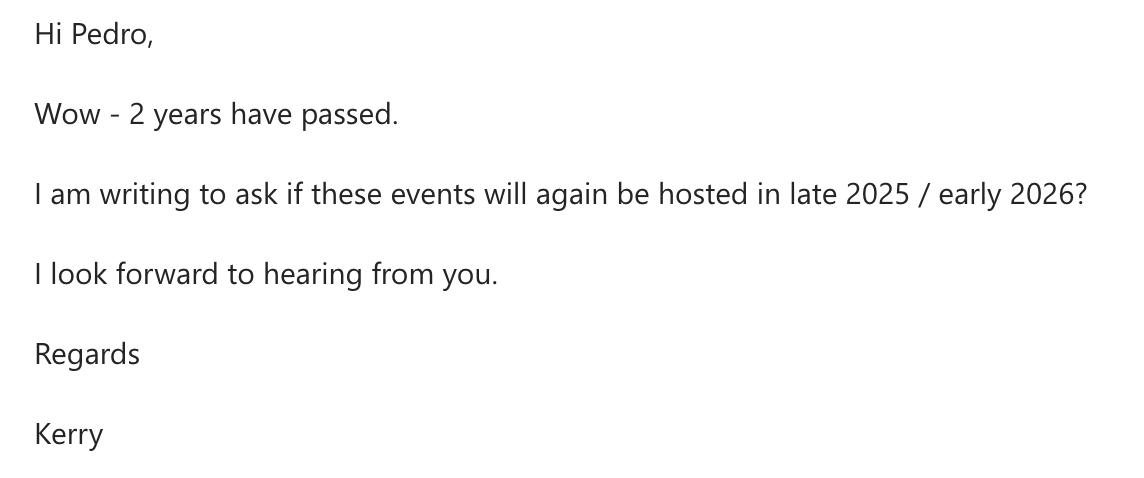
I'm Pedro Martins. Business owners bring me in when an offer they believe in isn't selling. I come in cold, and that's the point: I don't know the song yet. I read the ending, then fix what people see first. Here's what that looked like for some of them.
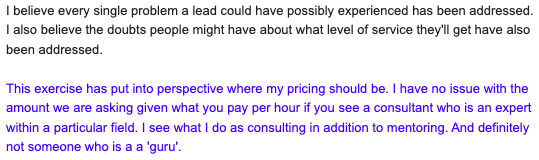
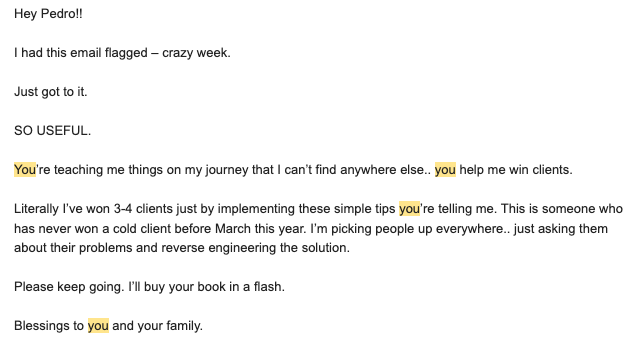
A 12-month mentorship. Same offer, same deliverables. New first screen, new price. Two sales from the first email.
A mentorship in investment education
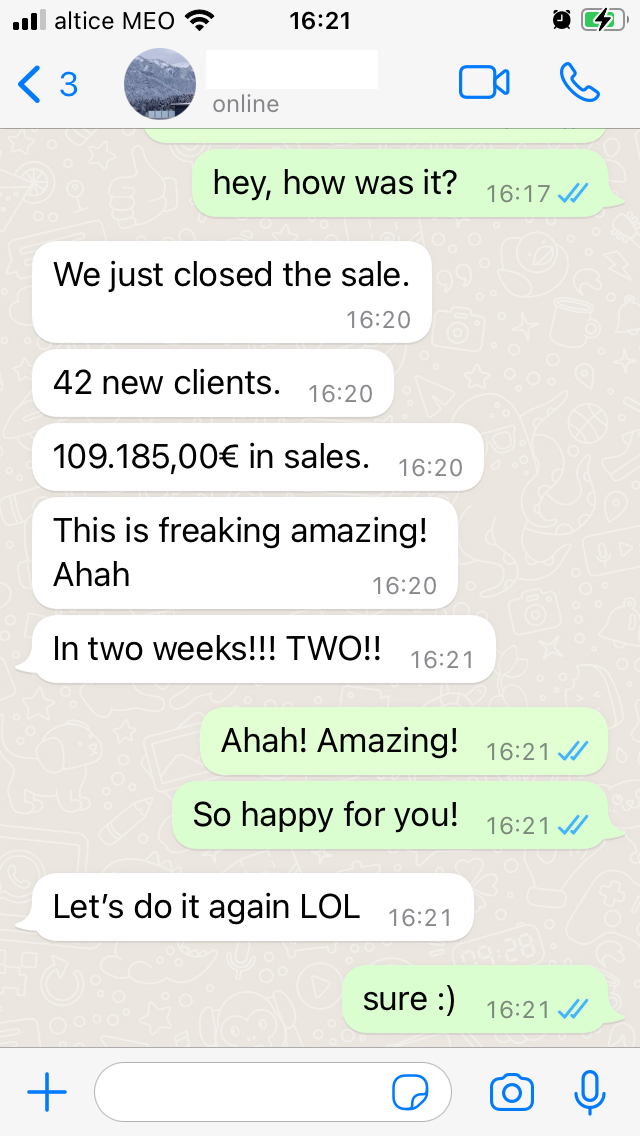
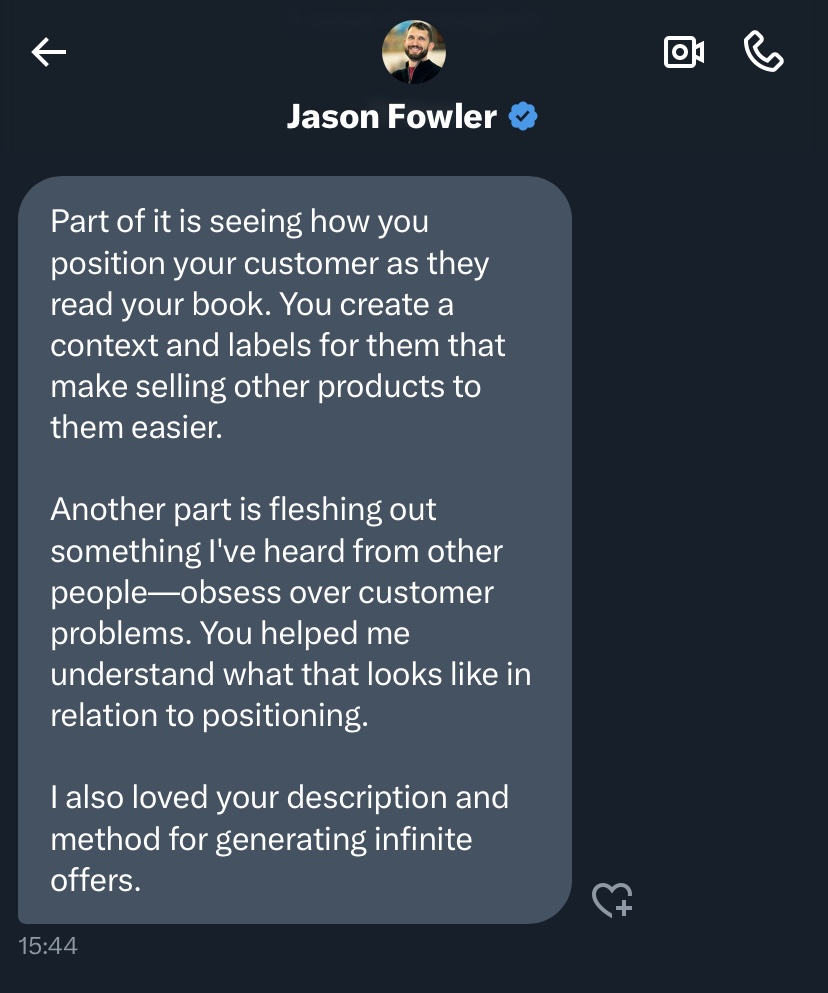
A real estate investment course, repositioned and relaunched closer to €2,500. 42 clients. A third of their best year ever, in two weeks.
Real estate investment education
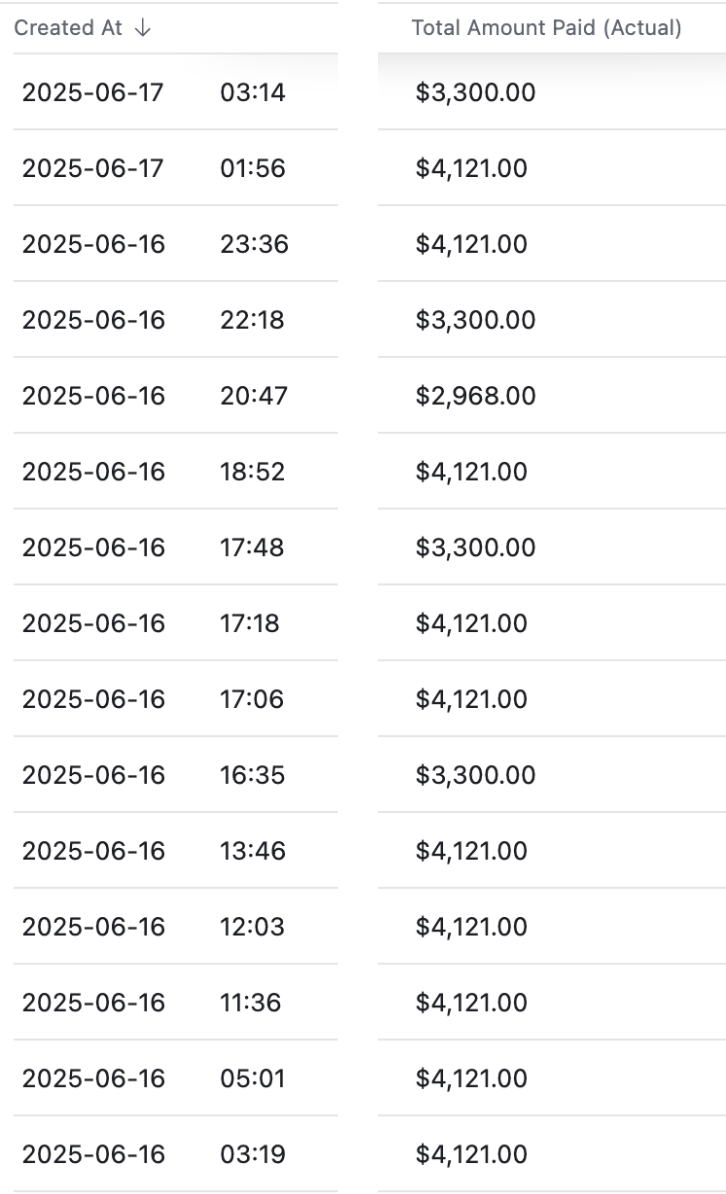
Human Garage's coaching certification, about USD 4,000 a seat. In the first month I reviewed its positioning five times, and tested each angle in an email until one landed. USD 30,000 that month. Then over 350 more seats in the next four months. Same offer, same deliverables. Only the frame changed.
Human Garage · coaching certification
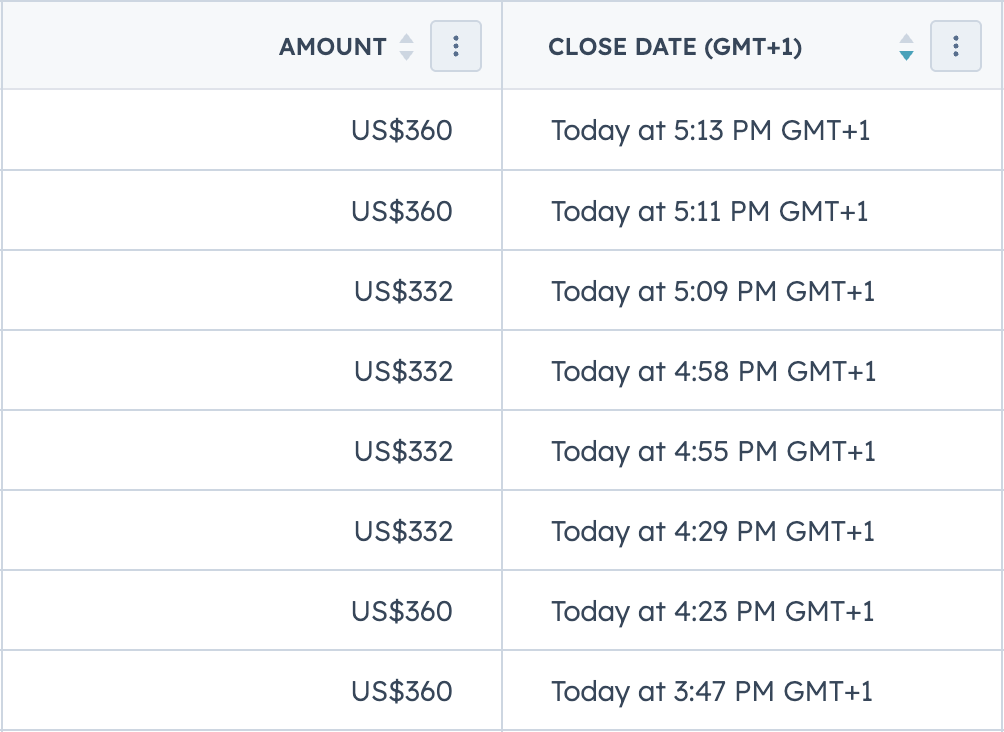
In the next launch: Partner Maneuvers, a $332 training for Human Garage, built around the one belief stopping people from joining their coaching certification. It sold over $250,000. 70% of buyers then upgraded, and that upgrade brought in over $1M.
Human Garage · online training
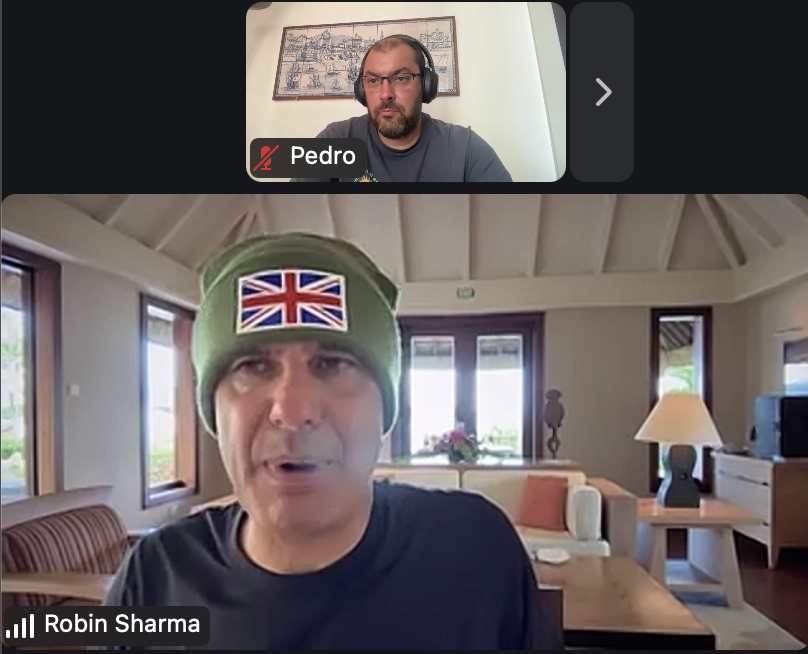
Robin Sharma's high-ticket program (USD 36,500) wasn't selling. Same program. I changed what buyers saw first. The 30 seats Robin wanted, in two months. The next year, with the same approach, we closed 60, with people reaching out asking to join.
Robin Sharma
None of these used the Lens. It didn't exist yet. They used the thinking behind it, done by hand.
I built the Lens so you don't need me in the room to get that cold read. You paste your asset in, it reads it the way I would, and you get the fix in your voice.
On Human Garage, that check, change and test loop took me five rounds by hand. The Lens and the Fair Test put the same loop in your hands.
These results came from my own client work and aren't a promise of yours. Your results depend on your offer, your audience and your testing.


Right now, most of your assets never get a fair chance. People leave before they find out if your offer is for them. Put in your own numbers and see what a cold read could be worth.
+€300 a month
About 1 extra buyer a month from one asset. That's 18 times what the Lens costs, and you can run it on every page you send.
Now picture that across every page, email, ad and script you send.
One click in Claude, or paste it once into ChatGPT or Gemini. A 5-step Quick Start shows you how, so you can run your first cold read today, even if you've never set up an AI tool.
The thinking behind the Lens, for when you want to know why it says what it says.
So you're never guessing whether the change worked. How to know, in 24 hours to 7 days, if the new opening beat the old one. Plain steps, no new software.
What every opening that sells has, and how to spot it in your own. Read it once and every Lens report makes more sense.
How I store every piece of proof (a message, a result, a screenshot). The Lens can only use proof it can see. This makes sure you always have plenty ready.
The core principle, two case-study breakdowns, surface vs deep problems, and brand vs offer positioning.
Too many good offers lose. People need them, want them, would happily buy them, and still pick something worth less that simply caught their attention the right way.
I've watched it happen to my partners' offers for years. And every time, the fix started in the same place: the first few seconds.
I built the Lens so more good offers win. So more of the right people give you the chance to show your value, and confirm it.
Right now, the only way to get me on your page is a partnership. I work with a few established business owners, with growing buyer lists and high-ticket offers, and I'm paid a share of the new sales. Most people can't get that.
The Lens is how I share the same first check with the people building toward it.
It's €17 so the decision is easy. One extra sale pays for it many times over, and it's yours to keep, for every page, email, ad and script. Whatever you need to get more people to see what you're worth.
Run the Lens on one page, email or ad. Test the new opening against your old one with the Fair Test. If it doesn't win, or you just don't believe it will, email me within 30 days and I'll refund every cent. Keep the book anyway. No forms. No hoops.
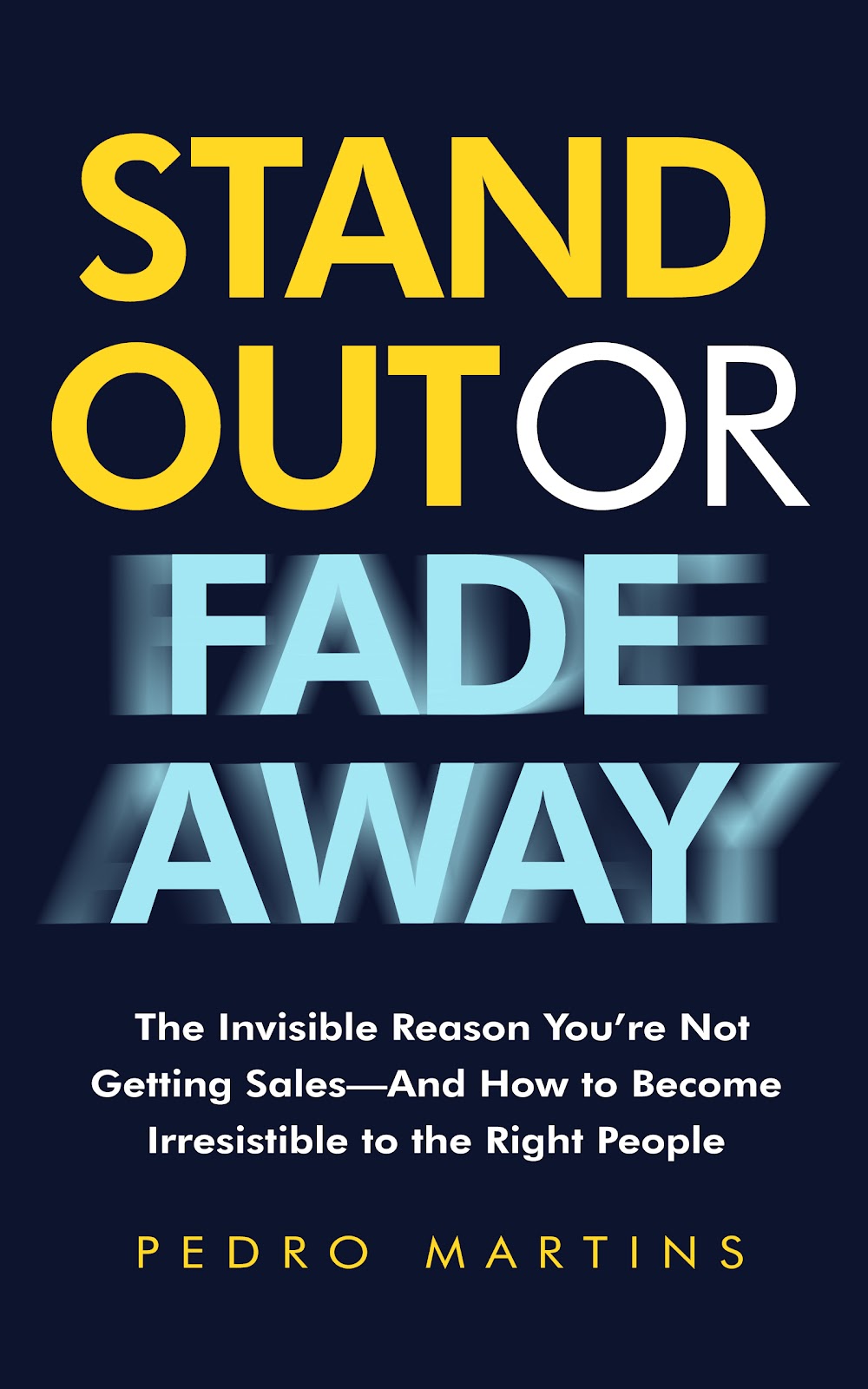
The Stand Out Lens, yours to keep (it runs in Claude, ChatGPT or Gemini), a Quick Start, my book in three formats, three bonuses, and in launch week, my positioning trainings. One payment, no subscription.
Yes. It's built for people who sell an offer, not people who write for a living. It explains what it finds in plain words and writes the new openings for you.
The Lens runs inside your AI, but it changes what your AI does. Ask ChatGPT on its own and the moment you explain your offer, it knows your song too, and it polishes from there. The Lens makes it read your page cold first, before it asks you anything. Then it starts at the end: the action you want, the price, and what already sells it on your page. And it writes the opening to set that up, in your voice, using only your own proof.
You can. But they know you, so they already know the song. They'll hear what you meant and say "looks good". The Lens has never met you. It only gets what's on the screen, like your buyers.
Sales and landing pages, emails, ads and video scripts. Anything that leads to a clear action. Not bios, DMs or posts with no next step.
My last full run, on a public sales page, took about 2 minutes, with the Lens using its own guesses. On your own offer, answering its few quick questions adds a little time, and makes the openings sharper.
No. It writes from your words and your proof, in your tone. If a line doesn't sound like you, ask it to change it, or keep yours.
No, and be careful with anyone who does. You'll see where your buyers leave and get a better opening to test. The Fair Test tells you if it won. If it doesn't, you get your money back.
Claude works best: one click with the Skill. ChatGPT and Gemini work too, with one paste. Long pages run more smoothly on a paid plan. The Quick Start shows every option, step by step.
Email me within 30 days for a full refund. You keep the book.
It goes out the way it is. People open it. A couple reply "love this!" By lunch it's quiet again, and that little voice is back: invisible, or just too polite?
Or you run the Lens tonight. You swap the opening, keep the rest, and send. And the next morning, the replies come from people who got it.
€17, one payment, yours to keep. One extra sale pays for it many times over. If the new opening doesn't beat your old one, every cent back, and you keep the book.
If I'm wrong, it cost you a couple of minutes and you get your money back. If I'm right, the line losing your buyers is on your page right now, and you can see it tonight.
I built the Lens so more good offers win. Let's make yours one of them.
So if you want the right people to finally hear what you meant, click below.